


Every winter, I enjoy combing through the various seed catalogues, searching for something new to grow. It’s fun to plant something not sold in stores and discover its flavour for the first time. Last year, I discovered Lovage!
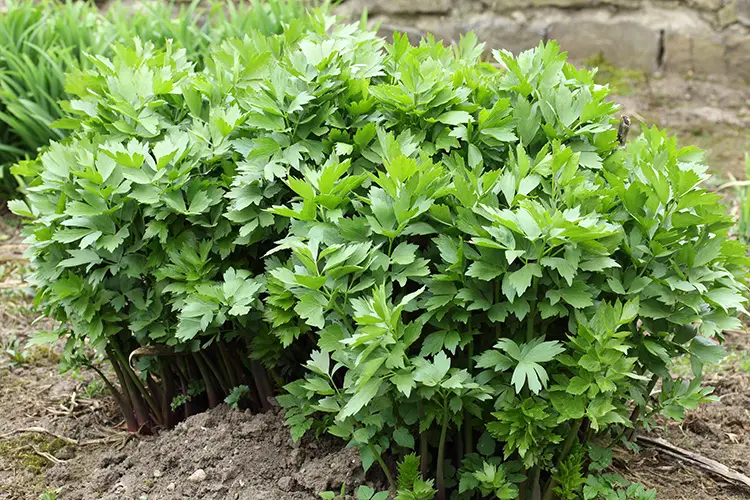
An established lovage plant
Lovage (Levisticum officianale) is a perennial herb of the Parsley family. It has a celery-like flavour, with green serrated leaves and hollow stems. Originating in Europe, it is popular in south and central European cuisines.
Traditionally, lovage had been used to treat stomach upsets, water retention, skin problems and poor circulation. Today, we use it for its culinary purposes. All parts of the lovage plant are edible, including the leaves, stems, roots and seeds.
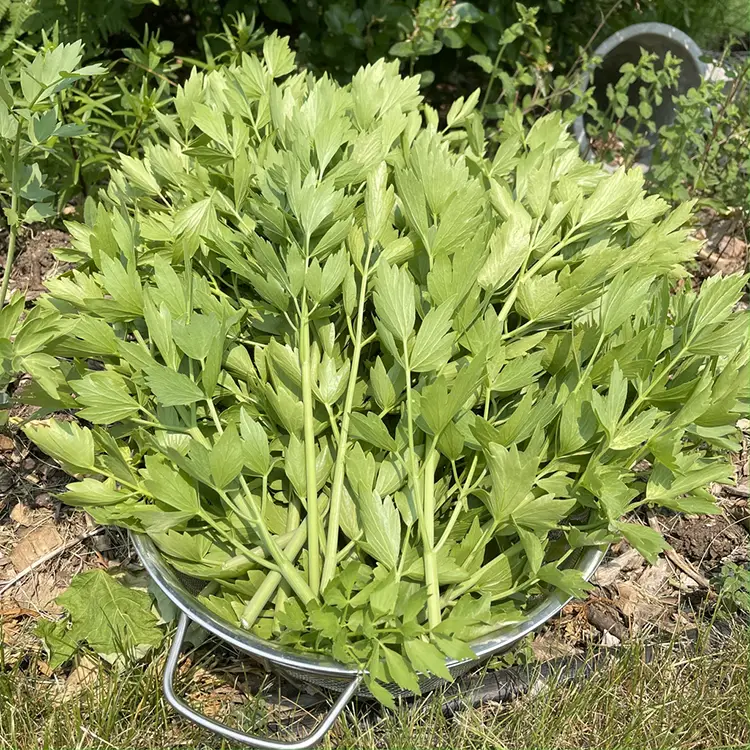
Lovage harvest
The leaves are my go-to when making chicken stock and soup. The flavour and smell they create is comforting and delicious! Lovage is a good alternative for celery because it is easy to grow and produces abundant stems that may be used fresh or dry.
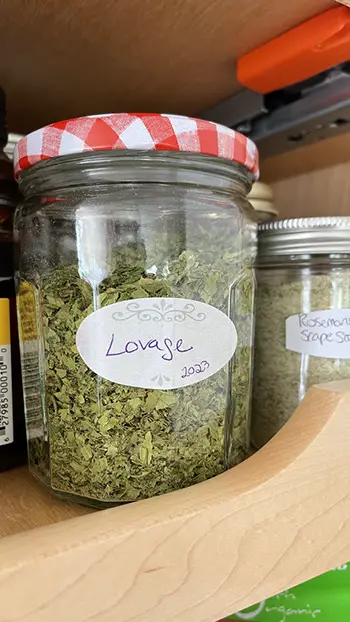
Dry lovage stored in a glass jar in a dark cupboard.
Lovage leaves may also be used to flavour vinegar and pickles, they may be added fresh to salads and used to flavour sauces. The stems of lovage may be chopped up and added to sauces and stews. Leave the stems whole and use them as a straw. The roots may be peeled and eaten as a vegetable. Like fennel seeds, the seeds may be used as a dry spice. Store dried lovage leaves in a glass jar for winter use. It has a much stronger flavour than fresh leaves.
In my research, I came across a few recipes using lovage. Mussels with fennel and lovage sound lovely. Add chopped lovage to goat cheese, creating a spread. Mince with chives and add it to mashed potatoes. Chop and add to tuna sandwiches (instead of celery). Add to grilled or poached fish, where lovage was one of the herbs used. Pair with garlic, tarragon, fennel, thyme and rosemary in an herb mix. Add to pasta, to baby greens with roasted beets and potatoes, and make a soup of fresh peas and lovage. This herb is quite versatile!
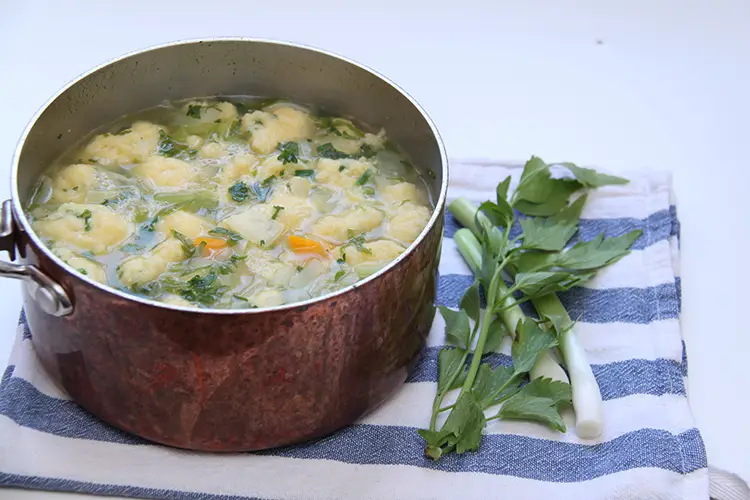
Soup with lovage as a seasoning
Lovage is one of the first plants to emerge in the spring, with chives and garlic. This year, my lovage plant came up at roughly the same time as chives.
In the first year, lovage can grow to two feet in height. Once established, however, it may grow as high as six feet! Harvest regularly by cutting the stems just above the base. Through harvesting, you delay seed production, which causes the plant to lose its sweet flavour and become bitter. In addition, regular harvesting encourages fresh regrowth. Left unharvested, plants will bolt and dry in the summer heat.

One-year-old lovage plant
How to Grow Lovage:
Lovage may be grown from seed or by root division. Start seeds indoors eight to ten weeks before the final frost date and transplant outside after any risk of frost has passed. Lovage is hardy and may be sown outdoors at least a month before the final frost date.

Lovage seedling growing in a 4-inch pot.
Plant four seeds per pot to ensure good germination, or sow two seeds per cell, then trim out the weakest seedlings. After hardening off, transplant seedlings into a full sun to partially shady location, in rich, well-draining soil. I grew lovage in a raised bed in my original garden, co-planted with other perennial herbs, like chives, tarragon and parsley. It was under-planted with wild strawberries, which spread and protected the soil from nutrient loss and weeds.
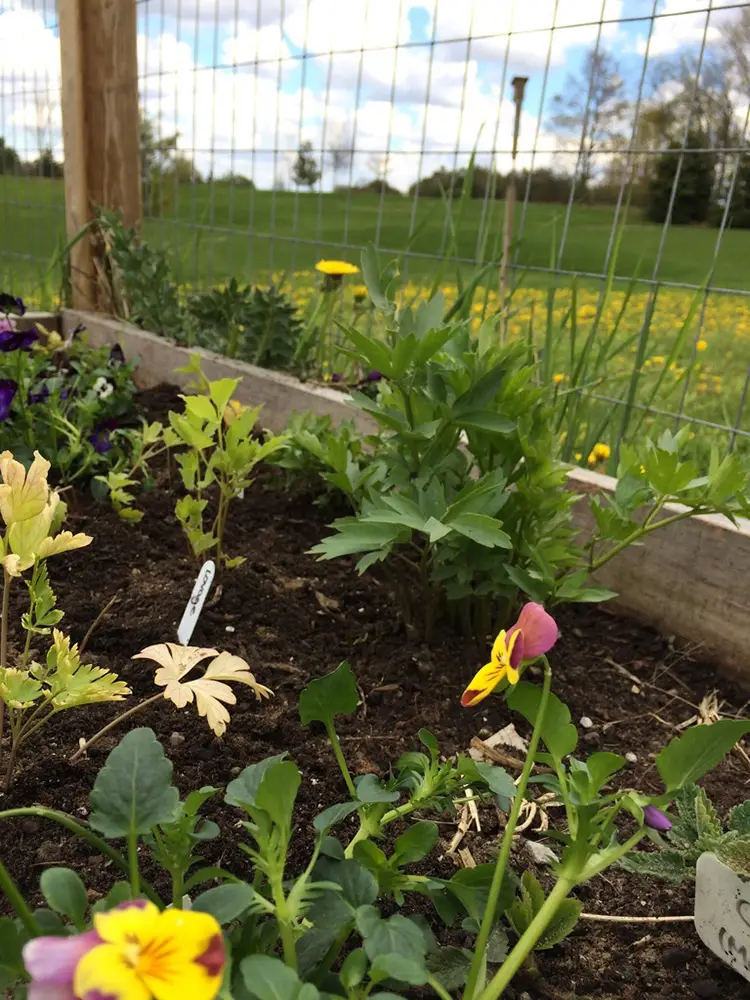
Baby lovage plant in a raised bed. It will grow much larger than this in the coming years.
Those raised beds were removed during my kitchen garden expansion, and all plants needed relocation. Due to the size of the lovage plant after its third year, it needed a more permanent location. I chose to move my plant into a perennial, inground garden. Since lovage droops when relocated, it had a hard time adjusting. I have since started many more plants, and they all have a permanent home in that same perennial bed. I take regular cuttings in the spring, then cut plants down to the ground before the heat of summer arrives. Plants regrow, and I get a second cutting at the end of summer.
Do you grow lovage? Have you used it in the past?
Happy Gardening!
We call this the Maggi plant. The Dutch love Maggi in their soup 🙂 and lovage has similar flavour.
Yes, thank you for pointing this out. I’ve heard about Maggi before.
Are there seeds on this plant and where are they? Thank you.
Seeds will develop in the flowerheads after the plant bolts.